
"SACRED " ART?
What makes an art "sacred" versus "religious"? Part 1

No academic teaching here but an ongoing personal reflection about “sacred” versus “religious.”
In the West there is a lot of confusion about this matter, and I think it is important to dive in the question and maybe change our mindset.
Sacred means consecrated, means set apart from the profane for a sacred purpose.
A church is a sacred building, set apart for worship. It is a “religious” building but most of all, it has been consecrated to God to be a meeting place between Him and his people.
A chalice is not only a religious object but also consecrated to contain the Blood of Christ and set apart for this purpose. It cannot be used for anything else.
A chasuble is a sacred vestment that visibly set apart the priest when he is performing his sacred duties.
Sacred means that God has put his “hand” on this object to mediate his action and presence.


There is nothing more “sacred” than the “sacraments”. They are really bearers of the grace of God.
So maybe we can say that there are levels of sacredness:
at the top the Most Blessed Sacrament that contains God Himself
the others 6 sacraments that are efficacious signs and instruments of God’s grace
sacramental (objects or acts) that are sacred signs with a spiritual effect
The 1983 Code of Canon Law (CIC) defines sacramentals as “sacred signs by which effects, especially spiritual effects, are signified in some imitation of the sacraments and are obtained through the intercession of the Church” (1166).
(Sacraments and sacramentals share a similar name, but the two are distinguished by their unique respective roles in the life of the Church. Whereas sacraments are the efficacious sign of grace, sacramentals bear resemblance to the sacraments. They prepare mankind to receive the fruit of the sacraments and sanctify different circumstances of life. from Catholic Answer)
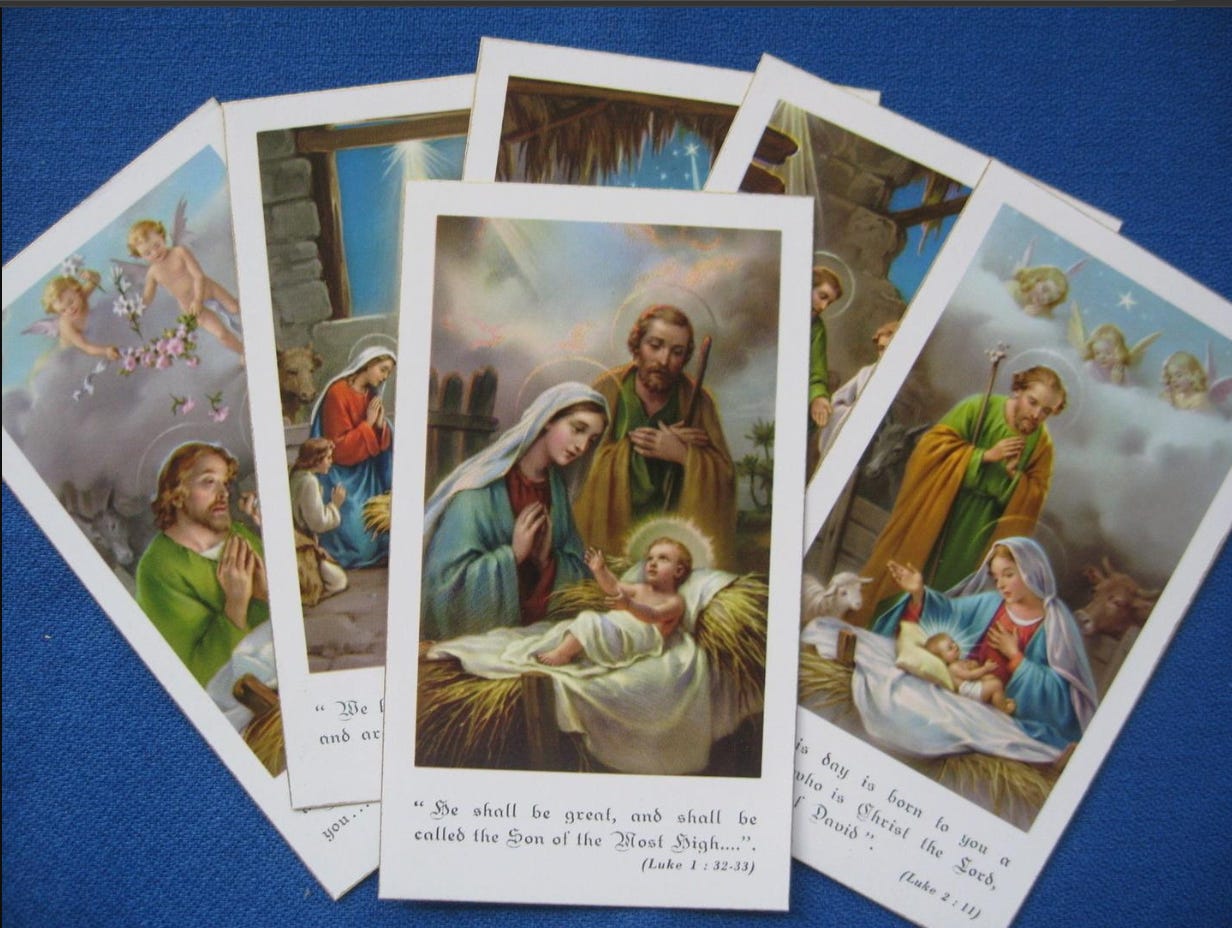
Holy water, crucifixes, rosaries, candles, scapular, holy cards are sacramentals (and also devotional)
An icon is also a sacramental and I may suggest that in some ways it may be at the top of the sacramentals.
An icon is more than a religious image because it has a liturgical purpose.
There is a distinction between devotional and liturgical (in the West, Catholics are very confused about this!).
And the liturgical takes precedence on the devotional.
The Liturgy is “Christ praying through his Church”
Devotions are the Church’s children praying to Christ”: They are “paraliturgical”.
In the Eastern Liturgies, the icon is a liturgical object. It has its own place during the Liturgy as a visible sign of the mystery celebrated; each solemnity, feast day and memorial day of a saint has its proper icon as well as its proper prayer, readings and hymn.
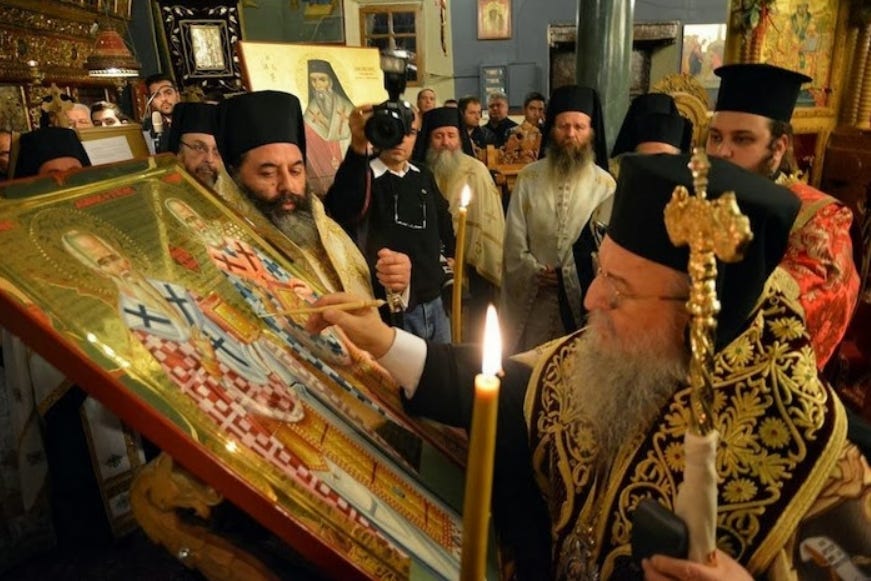
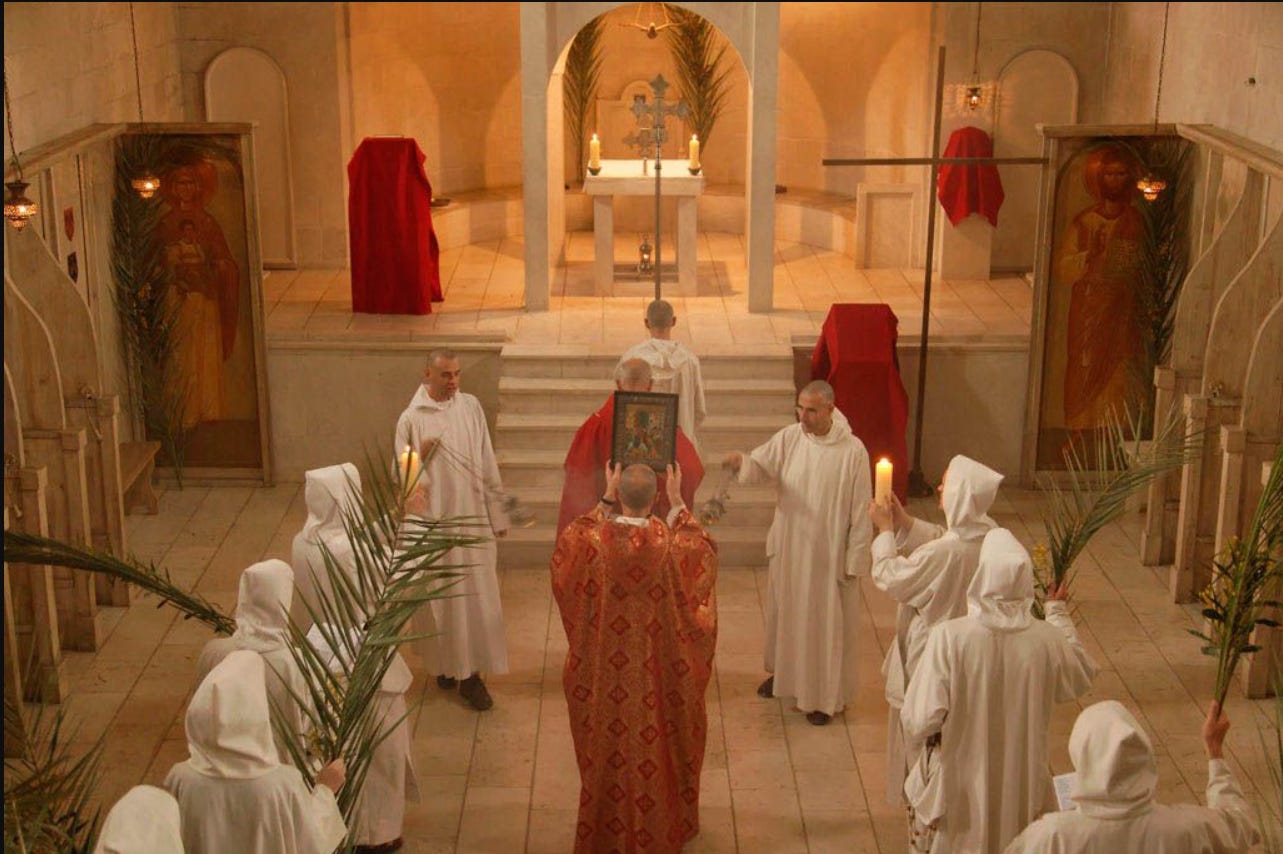
here the icon of Palm Sunday is carried during the Procession. (Monastery of Bethlehem)
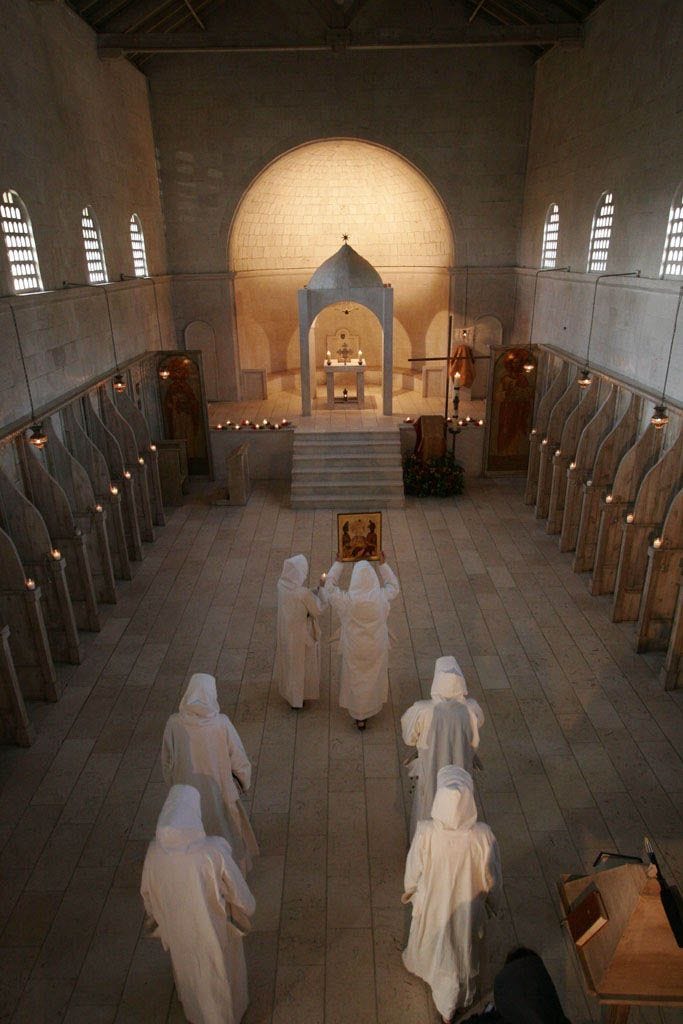
intronisation of the Icon of the Transfiguration at first Vespers: the icon is carried around and venerated while the troparion (hymn) of the feast is sung. (Monastery of Bethlehem)
The icon re-presents the mystery celebrated.
It makes it “present” as a window on heaven. It is a visible manifestation of the mystery, a liturgical-theological sign of the sacred event celebrated.
A religious image is an image
which has a religious subject.
Its purpose may be purely esthetic,
or devotional
or/ and liturgical
(If certains requirements are respected).
An icon
is a liturgical object
with a liturgical purpose,
consecrated and set apart,
with a theological meaning.
it is also an object of devotion.
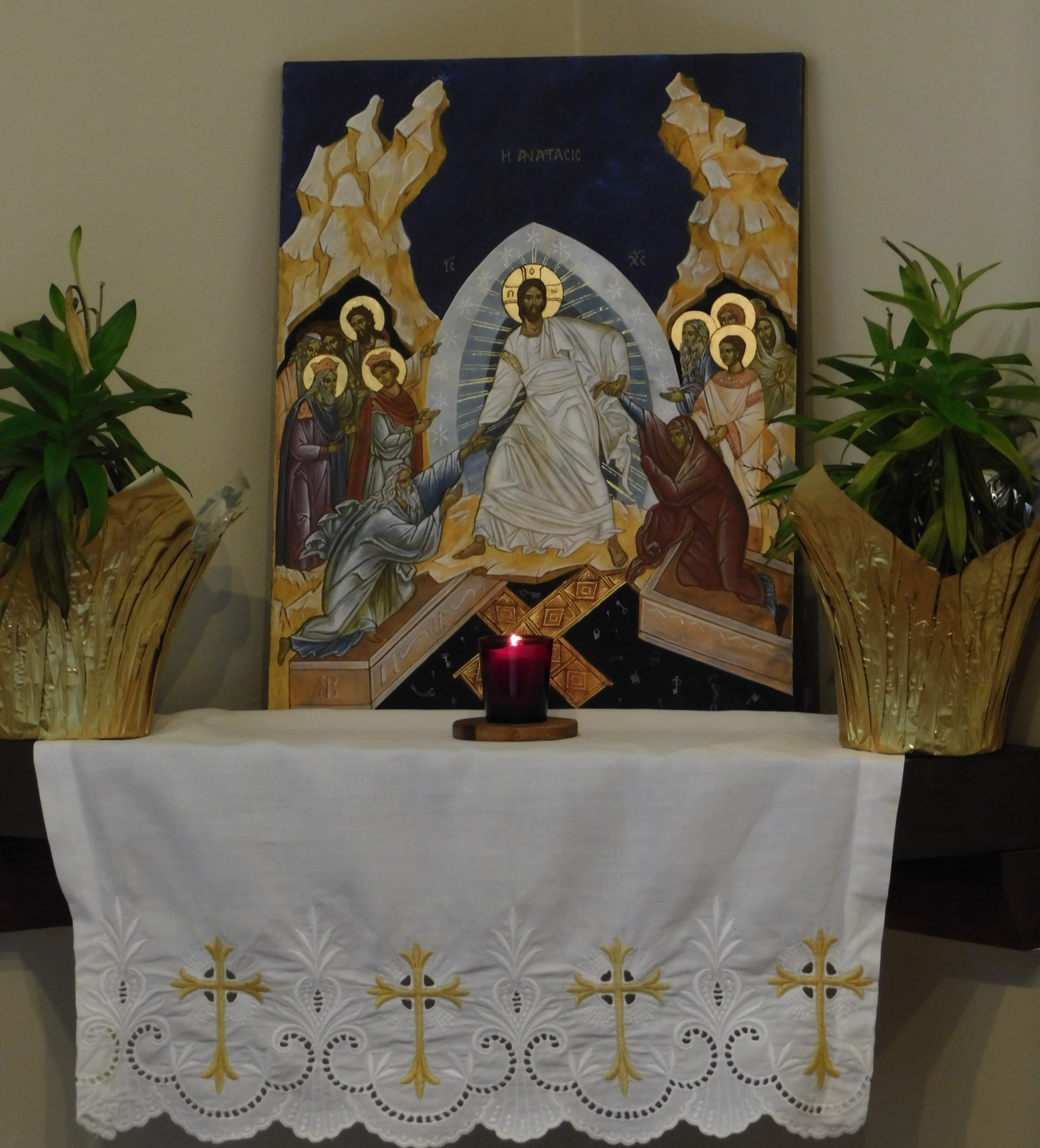
icon of the resurrection by Stella Maris Icon 2025 (for liturgical purpose)
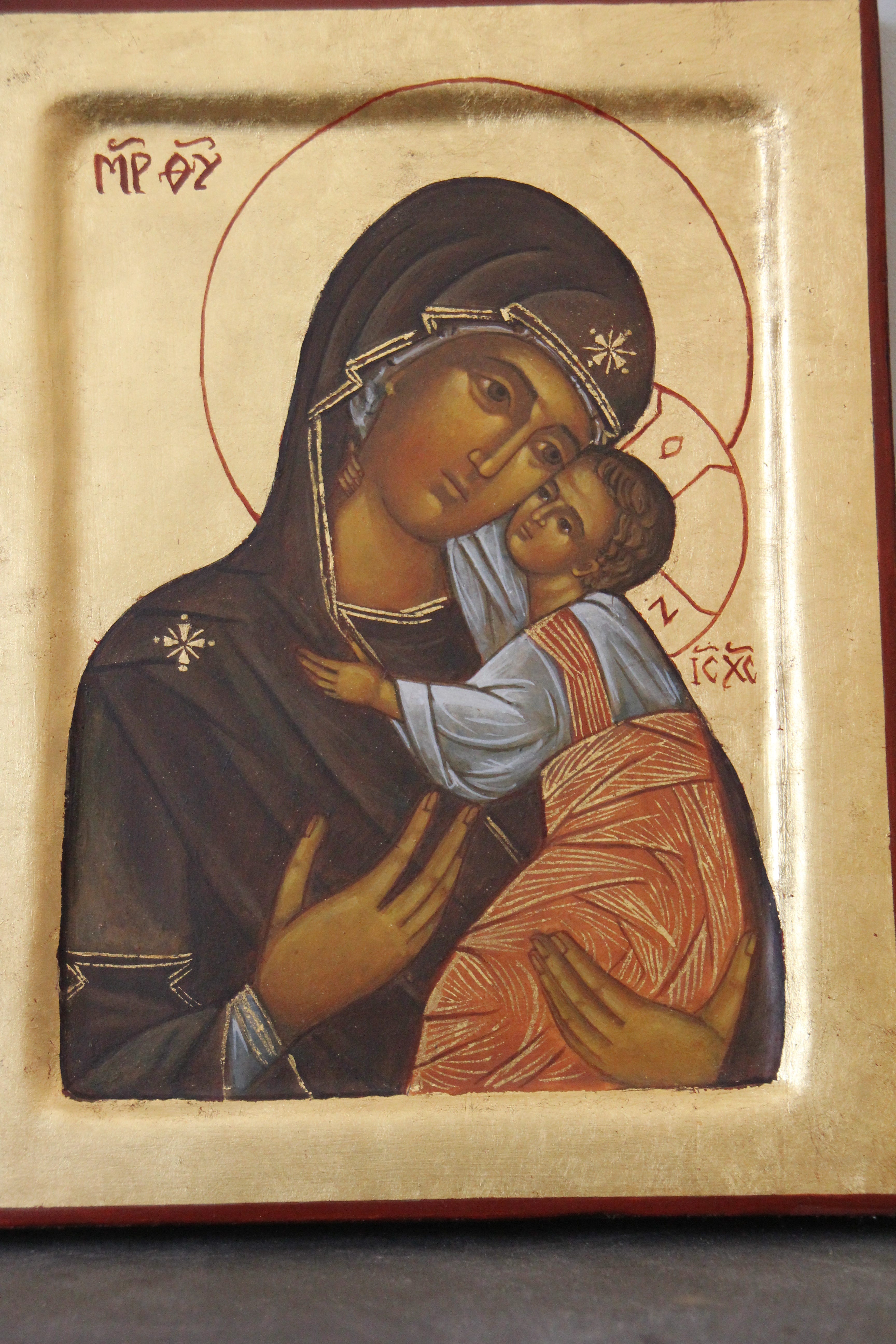
Mother of God of Vladimir, Stella Maris Icon 2025 (for devotional purpose)
The boundaries between the two
are not always easy to distinguish.
Religious images speak often more to our sensitivity
and human nature.
Icons speak to faith.
(to be continued)
Thank you. Unfortunately, disappointing for me since it stops with liturgical in the east. I hardly see the explanation for the west. In what concrete and specific way are western icons (before the renaissance mixup) liturgical?
Thank you, very clear, concise and helpful 🙏🏼❤️